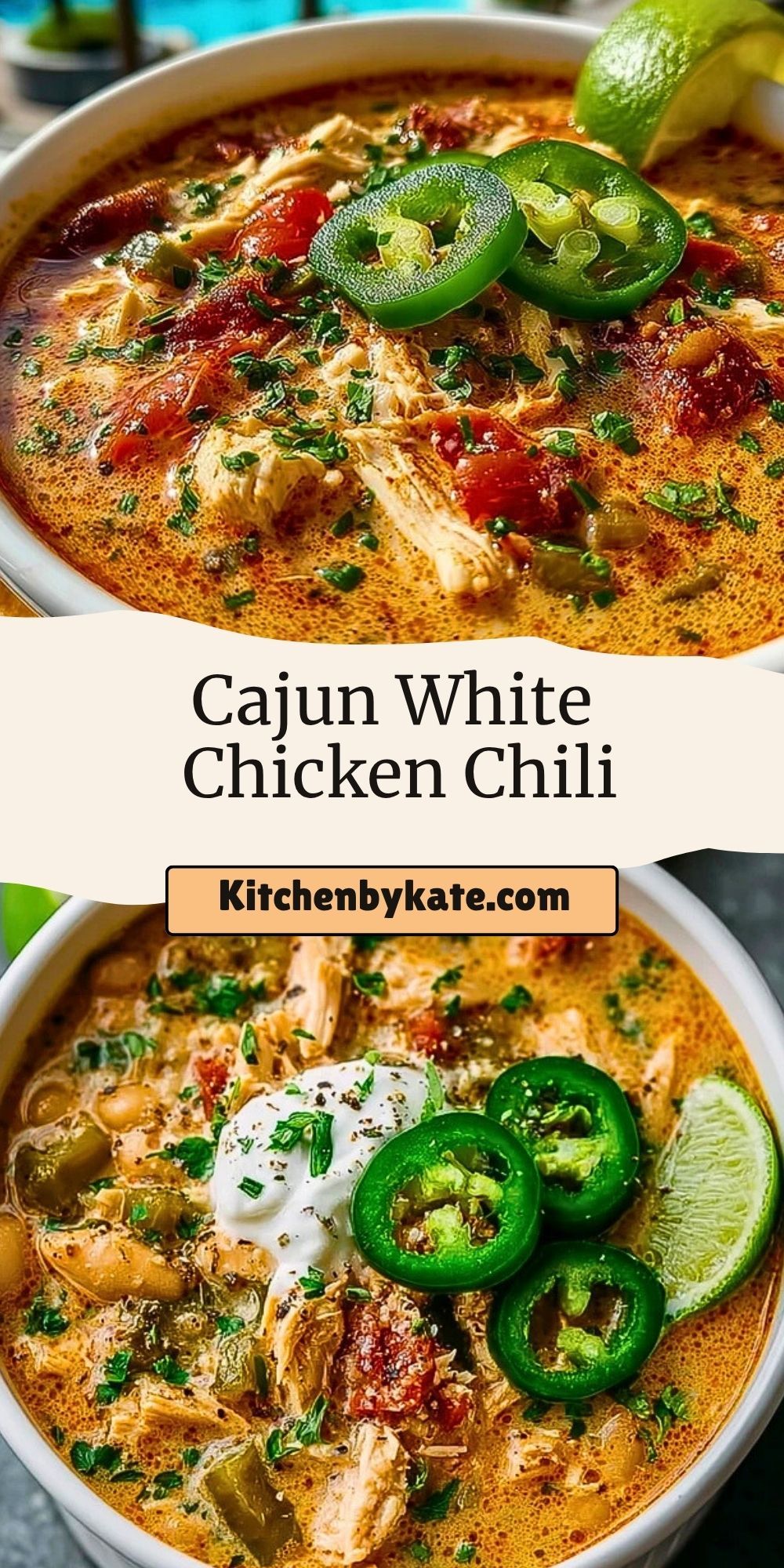
Where Louisiana soul meets comfort food mastery
The Art of Balance in a Bowl
This isn’t your typical tomato-based chili—it’s a sophisticated study in contrasts that showcases how cream, spice, and acidity can create harmony in a single dish. The “white” designation comes from the creamy base that allows the complex Cajun spice blend to shine without competing with tomato’s dominant flavor profile.
Understanding this chili means grasping how dairy proteins interact with capsaicin to temper heat while amplifying flavor, how beans provide both texture and natural thickening, and how acid brightens rich dishes without cutting through their essential character.
Total Cooking Journey: 55 minutes | Active Technique Time: 25 minutes
Serves: 6 generously | Skill Development: Intermediate flavor balancing
Core Lesson: Building layered flavors through proper sequencing

Ingredient Architecture
The Protein Foundation
- 2 large chicken breasts or thighs – Thighs offer more flavor and forgiveness, breasts provide leaner results. Both work beautifully when properly handled.
The Bean Structure
- 2 cups white beans (cannellini or great northern) – These aren’t just filler; they provide creamy texture when partially broken down and absorb surrounding flavors
The Liquid Medium
- 4 cups quality chicken broth – This becomes your flavor carrier. Homemade or high-quality commercial broth makes a noticeable difference.
The Aromatic Foundation
- 1 medium onion, diced – Builds the savory base through proper caramelization
- 3 garlic cloves, minced – Adds pungency that mellows during cooking
- 1 red bell pepper, diced – Contributes sweetness and color
- 1 jalapeño, sliced – Provides controlled heat and fresh pepper flavor
The Spice Architecture
- 2 tablespoons Cajun seasoning – The heart of the dish. Quality matters here—look for blends with paprika, cayenne, garlic, onion, and herbs.
The Cream Component
- 4 oz cream cheese – Creates silky texture and helps bind flavors
- 1/2 cup heavy cream – Adds richness without overwhelming the other elements
The Brightness Factor
- 1 tablespoon lime juice – Essential for cutting through richness and adding complexity
- 1/4 cup fresh cilantro – Provides herbaceous freshness and color contrast
The Foundation Elements
- Salt and black pepper – For seasoning adjustment throughout cooking
- 1 tablespoon olive oil – For initial searing and sautéing
The Technique Progression
Stage 1: Protein Development (8 minutes)
Season chicken generously with salt, pepper, and 1 tablespoon of your Cajun seasoning. This initial seasoning isn’t just flavoring—it’s beginning the flavor penetration process that continues throughout cooking.
Heat olive oil in your Dutch oven over medium-high heat until it shimmers. Sear chicken pieces without moving them for 4-5 minutes per side until golden brown. You’re not cooking them through—you’re developing the Maillard reaction that creates complex flavors.
Remove chicken and set aside. Don’t clean the pot—those browned bits (fond) are concentrated flavor that will enhance your entire dish.
Stage 2: Aromatic Foundation Building (6 minutes)
In the same pot with the remaining oil and fond, add diced onion. Cook over medium heat, scraping up those browned bits as the onion releases moisture. This deglazing process captures every bit of flavor.
After 3-4 minutes when onions become translucent, add minced garlic, diced bell pepper, and sliced jalapeño. Cook until peppers begin to soften and the mixture becomes fragrant—about 2-3 minutes more.
Stage 3: Liquid Integration and Seasoning (25 minutes)
Pour in chicken broth gradually, scraping any remaining fond from the pot bottom. Add white beans and the remaining tablespoon of Cajun seasoning.
While the liquid heats, shred your seared chicken into bite-sized pieces. Return shredded chicken to the pot.
Bring to a gentle boil, then reduce heat to maintain a steady simmer. Cook uncovered for 20-25 minutes, stirring occasionally. You’ll notice the liquid reducing slightly and flavors concentrating.
Stage 4: Cream Integration (5 minutes)
Reduce heat to low. Add cream cheese in pieces, stirring until completely melted and incorporated. The mixture should become noticeably smoother and more unified.
Slowly stream in heavy cream while stirring constantly. This gradual addition prevents curdling and creates a smooth, velvety texture.
Stage 5: Final Balancing (2 minutes)
Remove from heat and stir in lime juice. Taste and adjust seasoning with salt, pepper, or additional Cajun seasoning as needed.
The lime juice is crucial—it brightens the entire dish and prevents the richness from becoming overwhelming.
Understanding the Science
Why Searing Matters
The initial chicken searing creates hundreds of flavor compounds through the Maillard reaction. Even though the chicken will be shredded and cooked further, this step is irreplaceable for depth of flavor.
Bean Selection Logic
Cannellini and great northern beans have thinner skins that break down partially during simmering, naturally thickening the chili while maintaining some whole beans for texture contrast.
Cream Cheese vs. Heavy Cream
Cream cheese provides both richness and emulsification properties, helping bind the disparate elements. Heavy cream adds luxurious mouthfeel without the thickness that might make the dish heavy.
The Lime Factor
Acid doesn’t just add flavor—it balances fat and enhances other flavors. The lime juice makes the Cajun spices more pronounced while preventing palate fatigue from the rich ingredients.
Customization Strategies
Heat Level Management
- Mild version: Use 1 tablespoon Cajun seasoning, omit jalapeño seeds
- Medium heat: Follow recipe as written
- Fire lover’s edition: Add 1/2 teaspoon cayenne pepper and keep jalapeño seeds
Dietary Modifications
- Dairy-free: Substitute full-fat coconut milk for cream and use cashew-based cream cheese
- Lower sodium: Use low-sodium broth and reduce Cajun seasoning by half
- Protein alternatives: Rotisserie chicken, turkey, or firm white fish all work excellently
Texture Preferences
- Thicker consistency: Mash 1/2 cup of beans against the pot side before adding cream
- Brothier style: Add additional 1-2 cups broth after cream integration
- Heartier version: Add diced potatoes with the beans for more substance
Quality Indicators
Your chili achieves excellence when:
- Chicken shreds easily without being dry or stringy
- Beans are tender but maintain their shape mostly intact
- Consistency coats a spoon lightly without being gluey
- Flavors are balanced – you can taste heat, richness, and brightness equally
- Color is appealing – creamy white base with colorful vegetable pieces
Storage and Reheating Mastery
Immediate Service
Serve hot in warmed bowls to maintain temperature longer. The contrast between hot chili and cool garnishes enhances the eating experience.
Refrigeration Strategy
Cool completely before storing to prevent bacteria growth. Properly stored, it maintains quality for 4-5 days refrigerated.
Reheating Technique
Reheat gently over low heat, stirring frequently. Add small amounts of broth or cream if the mixture has thickened too much. Never boil during reheating—this can break the cream and create an unappetizing texture.
Freezing Considerations
While freezable for up to 3 months, dairy-based dishes can sometimes separate upon thawing. If this occurs, blend briefly with an immersion blender to re-emulsify.
Serving Enhancement
Classic Garnishes
- Fresh cilantro – Essential for color and herbaceous contrast
- Lime wedges – Allow diners to add additional brightness
- Jalapeño slices – For those who want extra heat
- Sour cream dollop – Adds cool richness for heat-sensitive palates
Bread Pairings
- Crusty sourdough – For dipping and substance
- Cornbread – Classic Southern combination
- Tortilla chips – Adds textural contrast and makes it more casual
Creative Toppings
- Avocado slices – Creamy richness that complements the spices
- Sharp cheddar – Adds another layer of richness and tang
- Pickled jalapeños – Acidic heat that cuts through cream
- Toasted pumpkin seeds – Unexpected crunch and nutty flavor
The Cultural Context
White chili represents the evolution of American comfort food—taking traditional chili concepts and adapting them with different ingredients to create something both familiar and novel. This version honors Cajun spice traditions while embracing the comfort food appeal of creamy textures.
The dish demonstrates how understanding flavor principles allows for creative adaptation while maintaining the soul of the original concept.
Final Technique Notes
Perfect Cajun white chicken chili requires patience in building layers of flavor and attention to temperature control during the cream integration. Each step serves a specific purpose in the final flavor profile.
The most common mistake is rushing the aromatic development stage or adding cream too quickly. Take time to properly develop your base flavors—they cannot be added later.
This recipe teaches fundamental techniques applicable to many other dishes: proper searing, deglazing, flavor building, and cream integration. These skills transfer to countless other recipes and help develop cooking intuition.
Most importantly, taste throughout the process and adjust as needed. Cooking is a dialogue between you, your ingredients, and your palate. This recipe provides the framework, but your taste preferences should guide the final seasoning decisions.